Communications Strategy & Systems Design
Our work focuses on building clear, durable communication inside public institutions: systems that reduce confusion, support leadership, and help people understand what’s happening without needing to decode it.
Studio Writing on Communication, Systems, and Public Trust
We write to examine how communication systems succeed or fail — especially in public, high-stakes environments.
These pieces reflect our approach to structure, cadence, access, and trust: the quiet mechanics behind whether institutions feel stable or chaotic to the people they serve.

The most memorable places in America are rarely the biggest.
They are the towns with the bakery, the old theater, the local festival, the diner that still feels like itself, and the stories that never make it into the travel magazines.
Too many communities already have the identity visitors are looking for.
They just have not presented it with enough care.
A good tourism publication does not invent charm.
It reveals what was already there.

When an AI assistant sent an email without final approval, the mistake exposed a larger issue: administrative work requires judgment, restraint, and an understanding of where access ends and permission begins. What follows is a practical look at delegated authority, invisible labor, and what repair requires after trust is breached.


I used AI to help my mom customize a teaching tool.
She needed a way for her special-needs student to remember his address and phone number—something he would actually learn. So I had AI write a song.
From a communications perspective, that’s the whole point—delivering a message that people can learn and retain.
Communication is education. And if you’re not meeting people where they are, it doesn’t matter how correct the information is.
The format changed. The outcome changed. And her student learned it.

A firsthand account of building a communications department inside local government—what happens when roles go unfilled, structure is missing, and the work still needs to get done. This essay explores how systems—not staffing narratives—determine whether a department actually functions.

Detroit’s communications offer a strong example of what happens when a new administration makes an office its own without losing the weight of the institution. This piece looks at stewardship, authorship, and why public communication should feel like leadership.
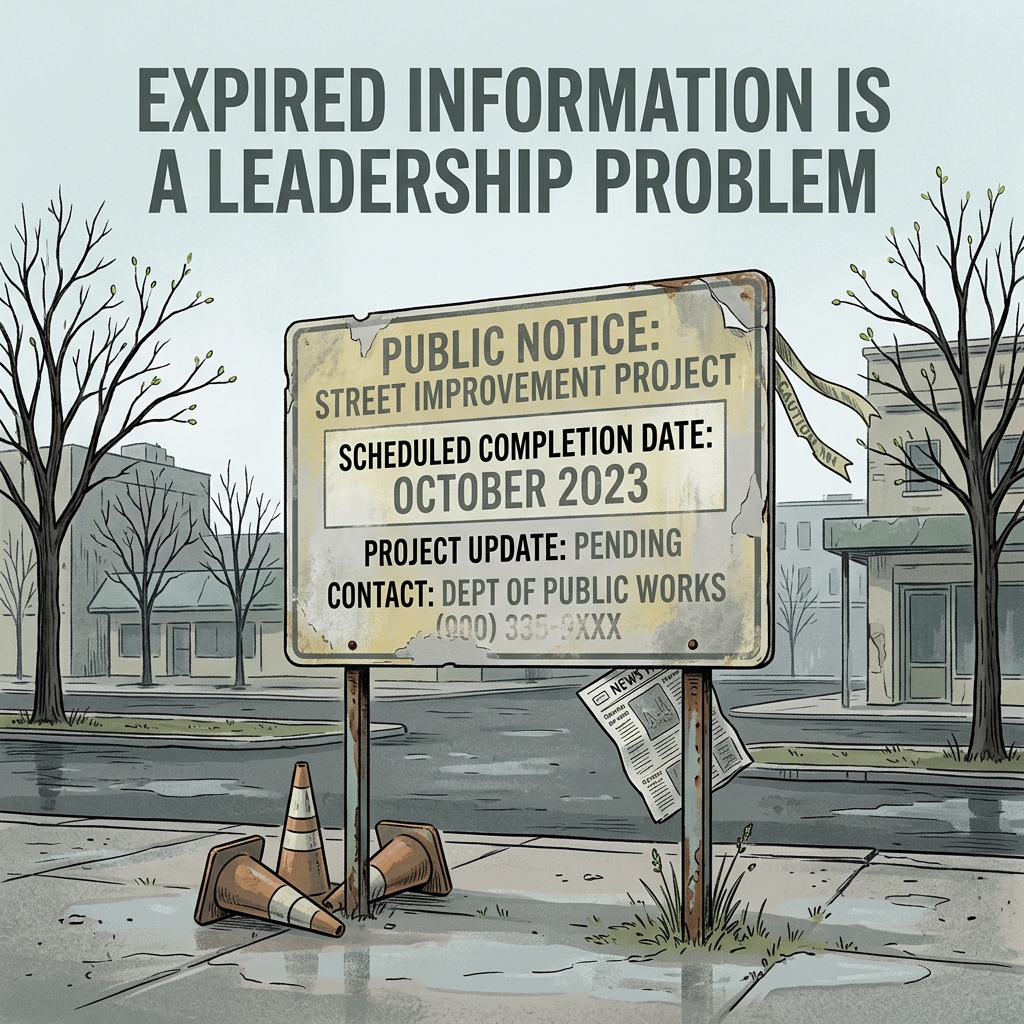

Exploring why trust—not technology—will define institutional resilience in 2035, and what leaders must design differently today.

Screenshots moved faster than statements. What the Brooklyn Beckham family silence reveals about crisis communications, narrative control, and timing.
A look at the design and launch framework behind Cleveland Heights’ Community Relations and Communications Department and how routine transparency builds civic trust.
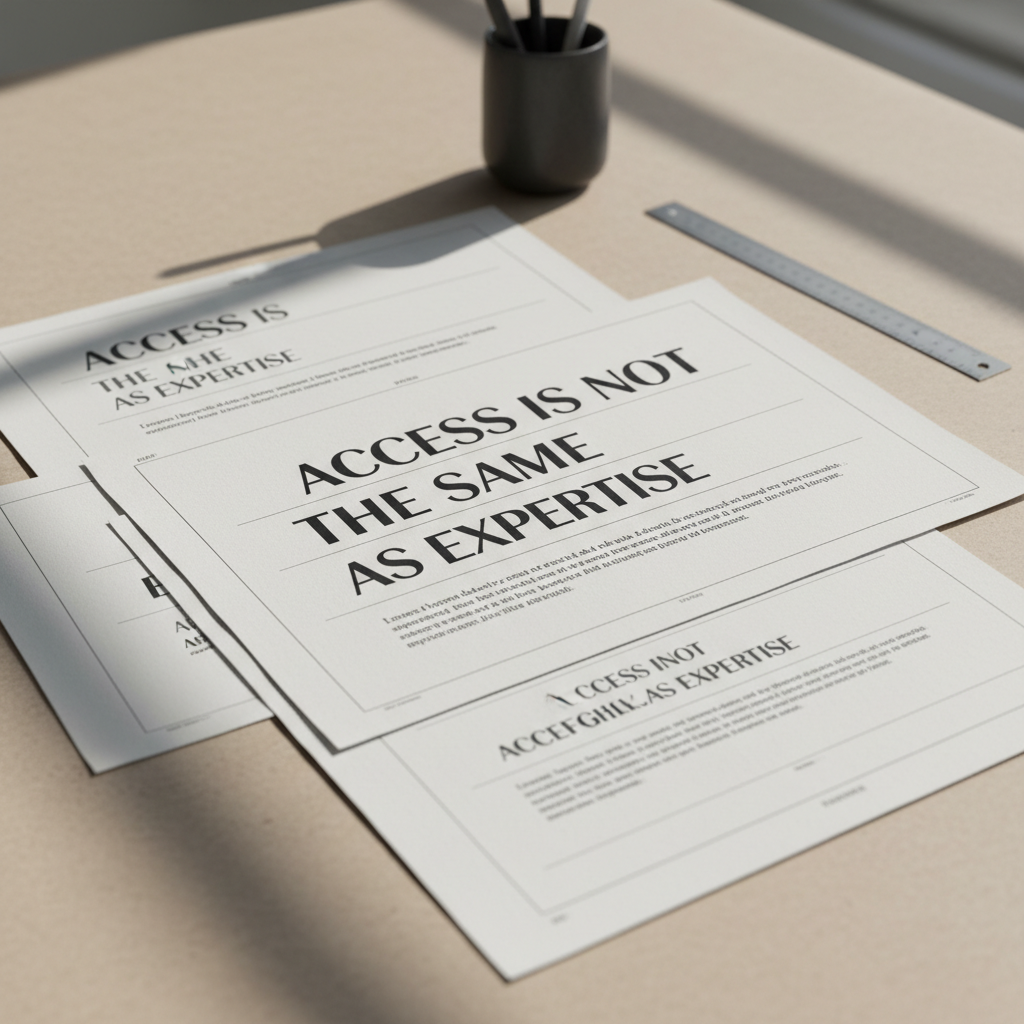
Access to design tools is growing—but expertise still lives in judgment, training, and restraint. A graphic designer’s take on Adobe Express inside ChatGPT.

Pantone’s 2026 Color of the Year is white. This editorial examines why Cloud Dancer is a logical cultural reset—not erasure, but an earned pause after saturation.
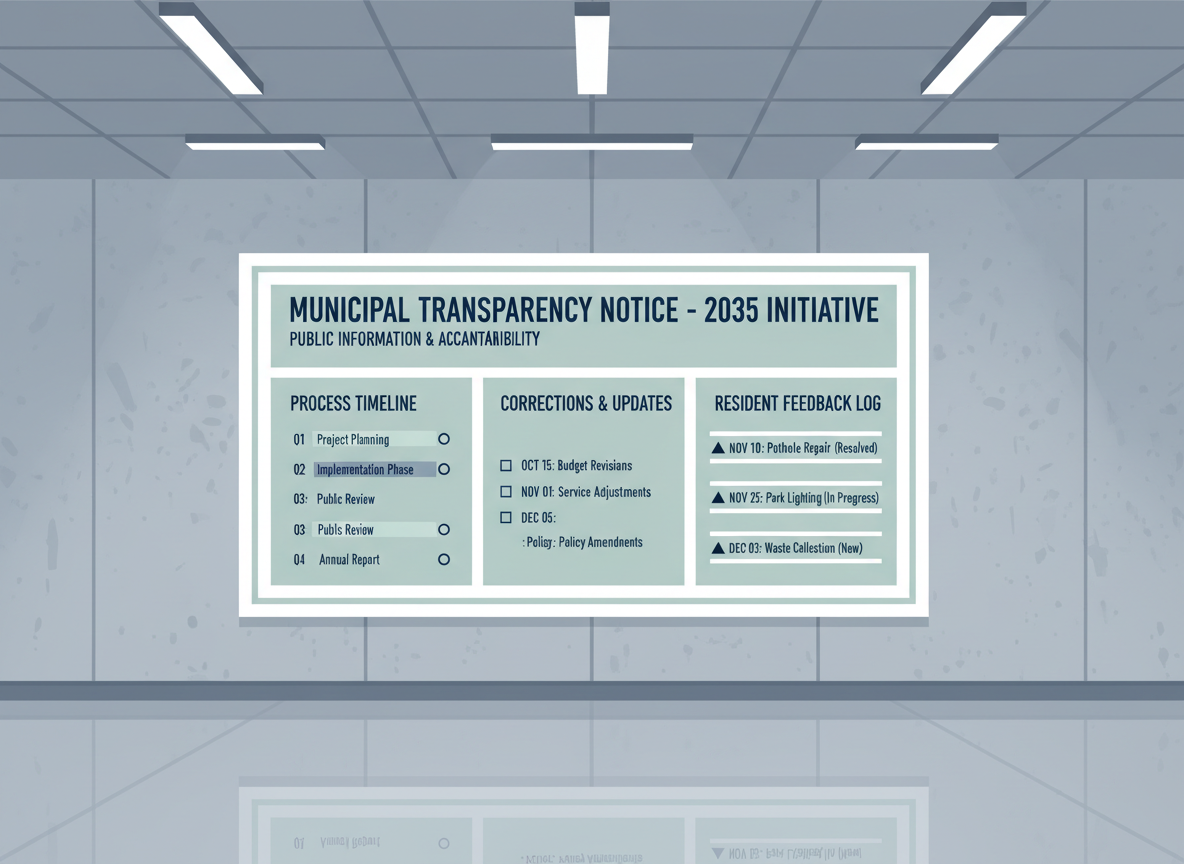
Trust isn’t built through better messaging—it’s built through systems. In this Design Futures case study from The New School, Frances Eugenia Collazo explores civic communication as infrastructure and what it means to design trust through visible process, continuity, and public accountability.

I write a lot about systems—how decisions get made, how information moves, and how structure determines whether people are treated fairly or arbitrarily.
This piece is about the part of systems design we don’t talk about enough: the moment where a system stops protecting people and starts protecting power instead.
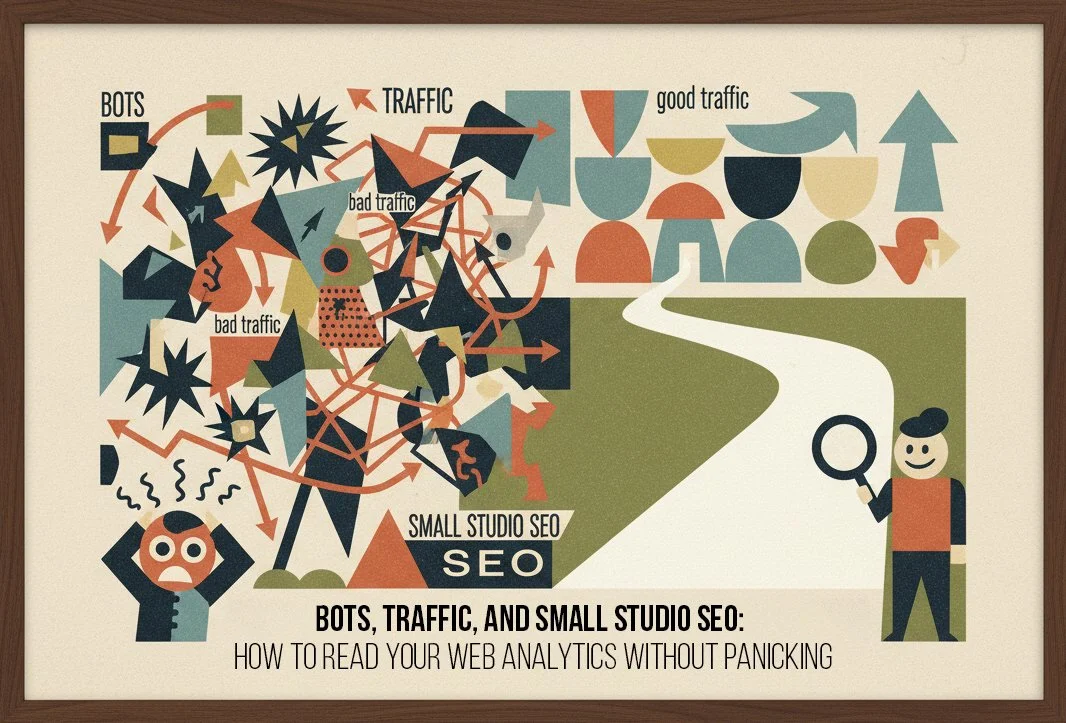
If you’re a small studio or freelancer, Black Friday and Cyber Monday can make your analytics look confusing—traffic from countries you don’t serve, sudden spikes at odd hours, and sessions that last zero seconds. Most of that is automated traffic. Once you understand that roughly half of all web activity comes from bots, the goal becomes clearer: pay attention to the behavior of real people, not the noise.

People don’t stay because of perks — they stay because of clarity.
In this piece, I break down why retention is a communication system, not a mystery, with insights from my sister, Ana Emilia Collazo, People & Culture Generalist at The Junto Hotel (Columbus, Ohio). Together, we explore how HR and Communications function as a joint stability engine — and why belonging is built by structure, not sentiment.
Read the full editorial → Retention Is a Communication Strategy

Everything repeats—retail seasons, city timelines, even the chaos of the holidays at home. The work gets easier when we stop pretending every cycle is brand-new. Systems, templates, and rhythm aren’t constraints; they’re permission. When the pattern is respected, the work finally flows.

Ralph Lauren’s collaboration with TÓPA shows how legacy brands can honor cultural lineage with clarity and competency—without ideology or performance.
Transparency is not about creating a spectacle. It is about making sure people can understand what is happening. The people following every meeting, argument, and document usually already know the story. The harder audience to reach is everyone else: people who care, but do not have the time to reconstruct an issue for themselves. Good communications gives them enough context to understand what happened, why it matters, and what choices are in front of them. That is what makes participation possible.

Most updates vanish. A good magazine doesn’t. For small and midsize businesses, print can be more than nostalgia—it’s a way to tell your story, show your work, and give people something they’ll actually keep.

Neutrality in public communications often functions as neglect. Silence lets false narratives harden into reality. Leadership means showing up early, correcting the record, and speaking plainly—even when it risks bad optics. Transparency, not polish, sustains trust: say what you know, what you don’t, and what happens next in communities served.

The NFL naming Abercrombie & Fitch its first official fashion partner is a culture story. Two legacy brands are betting that relevance now comes from co-creation. Abercrombie brings fit, feel, and fashion discipline; the NFL brings ritual and reach. Same signal with Bad Bunny’s Super Bowl booking: a league choosing cultural fluency over nostalgia. If the clothes read as weekday wardrobe and players show up as authors—not mannequins—this isn’t a logo play. It’s identity realignment. The message is that in a multilingual, style-forward America, authenticity is the new margin.

When the NFL tapped Bad Bunny to headline Super Bowl LX, the backlash was instant and tired. The same “This is America” refrain, as if Puerto Ricans aren’t American or as if English is a citizenship test. But the data—and the culture—tell a different story. Spanish is the second heartbeat of this country, and Latino fans are already reshaping U.S. sports. Bad Bunny’s halftime isn’t politics. It’s product strategy.

Continuity isn’t housekeeping—it’s stewardship. Logos and templates won’t save a department built on personalities instead of practices. When systems fail, residents feel it first: unanswered requests, slipping participation, and trust that’s hard to win back. This piece lays out a discipline of design—governance, shared access, documented workflows, true source-of-truth calendars—so communications keeps working when people change. Turnover isn’t failure; it’s inevitability. The measure of leadership is what still runs when you’re gone.
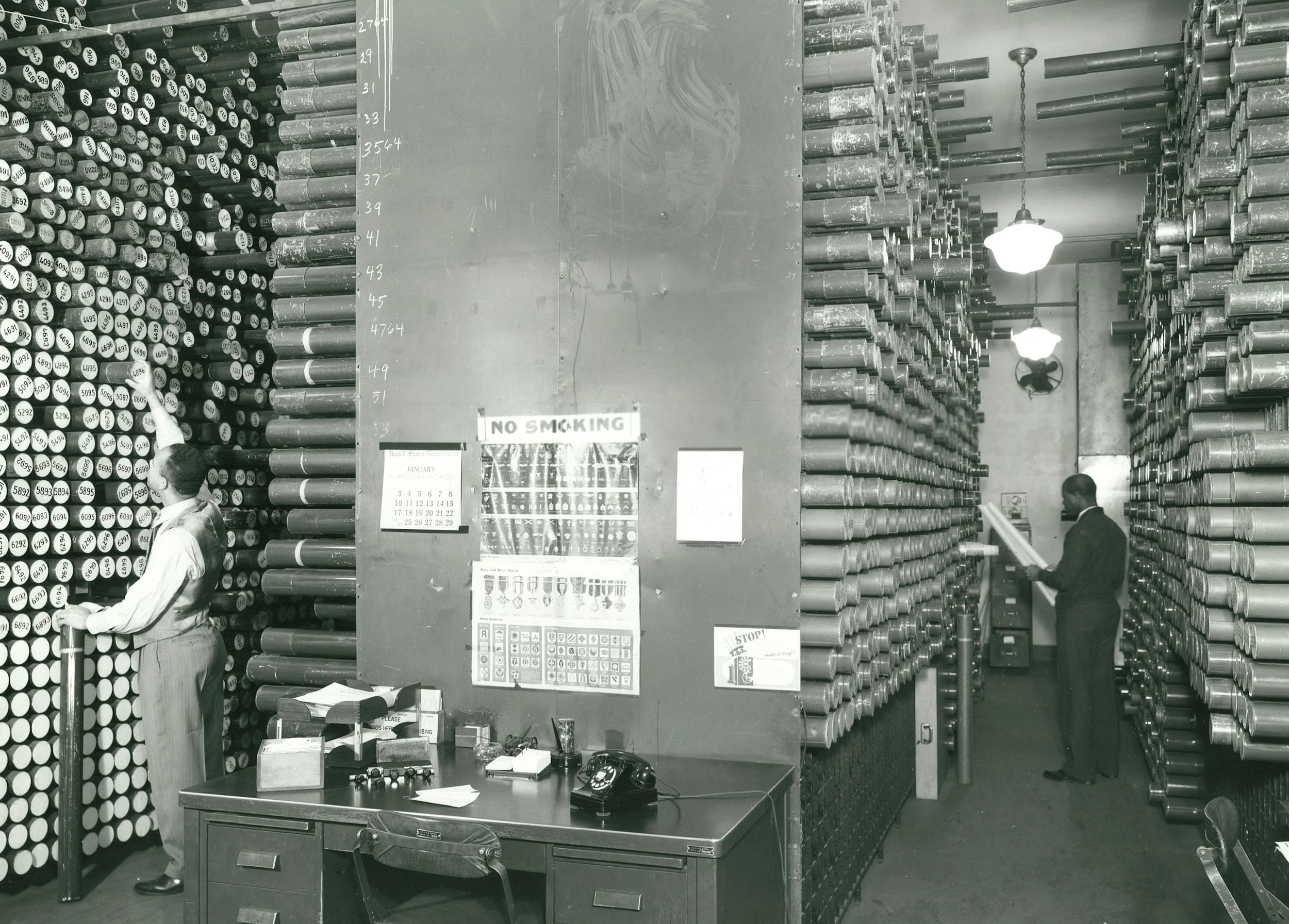
In municipal government, transparency isn’t only what you release—it’s when. Cadence is a crisis tool. A steady, well-framed rhythm of public records releases keeps the narrative anchored to facts you can stand on, instead of leaving space for rumor and performative outrage. Dump everything at once and people tune out; trickle inconsistently and they assume you’re gaming the clock. The fix is practice, not vibes: tier your cadence (normal → heightened → crisis), pair every drop with a plain-language summary and FAQ, and end with “next update on ___.” Document the triggers, roles, and review SLAs in your crisis communications playbook so cadence survives leadership changes and pressure. When the city defines the beat, it owns the tempo of the crisis—and the trust that follows.

When only a quarter of us show up, rumor becomes “record” and power moves in quiet rooms. If taxation feels like theft, apathy is the getaway driver. The real question: how do we make participation possible—and worth it—for people already stretched thin?

Why naming who did what—and when—is accountability, not a campaign.
There’s a moment almost every week when someone scolds our Cleveland Heights channels for sounding “partisan.” It usually follows a post full of numbers, dates, and proper nouns—a road resurfaced and paid for, a grant awarded, a contract executed. The verdict arrives: de-politicize your newsletter, as if facts printed on City letterhead are campaign slogans in disguise. Talking plainly about city work isn’t politics; it’s accountability. I know that in a season charged by a mayoral recall effort, facts can feel inconvenient to those invested in a different narrative. But the remedy for tension isn’t silence—it’s specificity, documentation, and an open file cabinet. Facts don’t campaign; they timestamp.

Public records are meant to be the conscience of local government — a shared foundation for accountability. But in Cleveland Heights, I’ve watched that foundation fracture. First, records were turned into content: fodder for outrage, clipped and spun until spectacle replaced substance. Now, the injury runs deeper. The record itself is refused — excluded, dismissed, or framed as dishonest at the moment of its creation.
When that happens, the very possibility of shared truth collapses. The role of municipal communication is no longer just to clarify but to ensure survival: to keep the record visible, accessible, and enduring even when others would prefer it disappear. Holding the line means carrying the record forward — not once, but over and over — until it becomes part of civic memory.

Selected Work
A curated set of work that reflects my approach to municipal communication, structure, and resident-centered clarity.
-
Resident Storytelling & Editorial Direction
A resident-centered magazine designed to communicate city updates, highlight community life, and provide clear, accessible, plain-language information. I led editorial development, structure, and visual direction to support transparency and community connection.
-
I create communication systems that reduce confusion, speed decision-making, and create consistency across departments. This includes templates, routing structures, response cadences, and process frameworks that turn reactive communication into organized, predictable operations.
→ Public Records Response — Proposed SLA (City of Cleveland Heights)
-
I develop structured, steady, fact-based messaging for challenging or high-pressure moments. My approach emphasizes clear roles, aligned information flow, and update cadence that keeps residents informed without escalating tension. The goal is always to maintain trust and reduce confusion during sensitive periods.
→ City News Sept, 26
→ City News Sept, 19
→ City News Sept, 12
About Frances Eugenia DesignFrances Eugenia Design is a communications strategy and systems design studio focused on clarity, structure, and public trust.
Our work sits at the intersection of operations and storytelling — designing communication systems that help institutions function calmly while making information accessible and meaningful to the people they serve.
We specialize in long-term continuity: building communication structures that hold up through leadership changes, public pressure, and moments of uncertainty.
Artificial intelligence can be extraordinarily useful and still require moral limits. A lawsuit alleging that child sexual abuse material depicting a real survivor was used in connection with Grok raises a question much larger than one company or one case: what are we willing to tolerate in the name of technological progress? If there is one place where the answer should simply be no, it is the exploitation of children.