There Have to Be Lines We Will Not Cross
I use artificial intelligence, and I think it is one of the most consequential technologies we'll deal with in my lifetime. I am not particularly interested in joining the camps that have formed around it, where you are apparently required to decide whether AI is going to save civilization or destroy it. Most technologies are more complicated than that. They are useful in some hands, dangerous in others, and eventually we have to decide what we are willing to tolerate in exchange for what they give us.
However, some decisions should be easy.
Protecting children is one of them.
A woman identified as Jane Doe has filed a proposed class-action lawsuit against xAI and X alleging that child sexual abuse material depicting her was included in data used to develop Grok's image and video capabilities. She says she was sexually abused and photographed when she was a very young child, that those images have circulated online for decades, and that Grok later generated new sexually abusive images depicting her. The lawsuit also alleges that material generated through the system can make its way back into training data. These are allegations, and they have not been proven in court.
While that distinction matters, understanding what we are actually talking about matters too.
This is not an abstract argument about whether an AI company scraped a newspaper story without permission. It is not a complicated licensing dispute involving a photograph or a book. Child sexual abuse material is evidence of the sexual abuse of a child.
Calling harm data does not change what it is.
The lawsuit is particularly disturbing because the larger problem is not theoretical. The National Center for Missing & Exploited Children reported more than 400,000 reports involving generative AI and child exploitation in 2025. More than 12,000 involved companies reporting that child sexual abuse material had been identified in generative-AI training data.
I keep coming back to that number.
We have spent years debating what artificial-intelligence companies are allowed to train on. Books. Newspaper articles. Photographs. Illustrations. Music. Code. The work of writers, artists, photographers and people who never imagined that something they put into the world would become raw material for somebody else's machine.
But this is something else entirely.
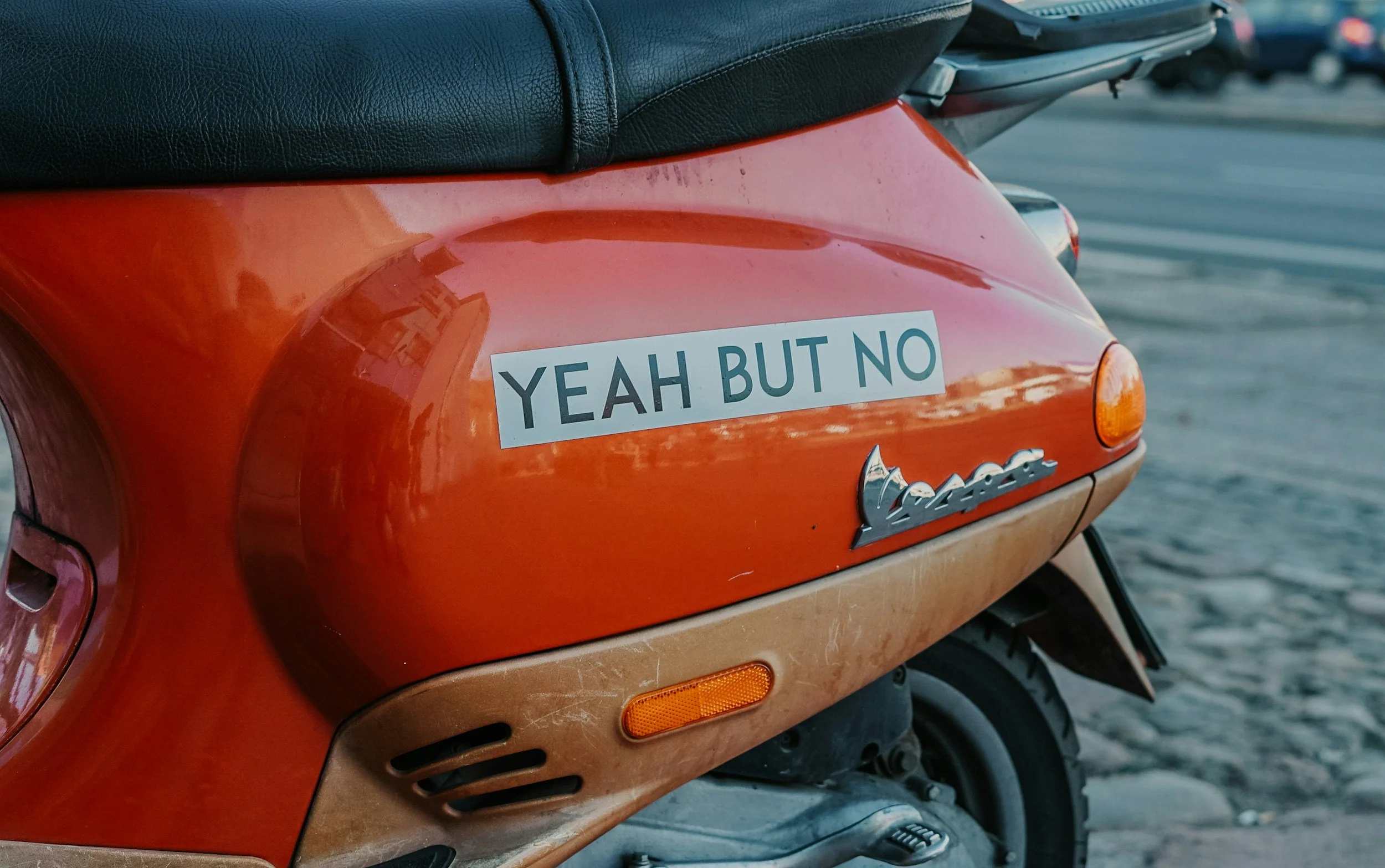
There has to be a point where we just say no. Not that the dataset was enormous. Not that filtering is difficult. Not that the technology operates at a scale human beings can barely comprehend. No. This cannot be in the machine.
I understand that the technical reality is complicated. Training datasets can contain enormous amounts of material. Identifying illegal imagery without unnecessarily exposing people to it presents its own problems, and removing the influence of material after a model has already been trained is not the same as deleting a photograph from a folder.
Difficult is not the same thing as optional.
That distinction feels increasingly important because technological language has a way of creating moral distance. We talk about datasets, classifiers, model weights, filtering, safeguards, and scale. All of those things are real, and people who understand them should be involved in solving the problem. But somewhere in that language it becomes possible to forget that before there was a file, there was a whole actual child.
That is a very distinct line, not a data-quality problem.
The problem also goes beyond what may have entered a training dataset. Generative AI is making it possible to create new abusive imagery at a scale and level of realism that did not previously exist. The Internet Watch Foundation reported thousands of realistic AI-generated child sexual abuse images and videos in 2025, including material created using images of real children and known victims.
That is why I have a problem with the comfort provided by words like synthetic.
Synthetic can make the harm sound invented. A computer generated the image; therefore, perhaps nobody was really involved. But a real child's photograph can be manipulated. Images documenting real abuse can be used to manufacture new ones. A survivor can spend decades knowing that images of what happened to her are circulating and then discover that technology has made it possible to create more.
There is nothing synthetic about that harm.
I am not anti-AI. I do not think acknowledging this problem requires pretending the technology has no value or that every person building it is reckless. I think we should be able to hold more than one idea in our heads at once. Artificial intelligence can be extraordinarily useful, and the people building it can still be required to meet moral standards.
In fact, if this technology is going to become as important as its creators keep telling us it will, then the standards should become more serious, not less. Greater capability should bring greater responsibility. "The technology is complicated" cannot become permission to stop judging what is acceptable.
We do that too often already. Everything becomes negotiable. Every obvious position eventually acquires a counterargument. Someone points to an edge case. Someone explains why the problem is technically difficult. Someone warns that drawing a hard line could interfere with innovation. Eventually we become so sophisticated about everything that we are no longer willing to say that anything is simply wrong.
I do not think everything deserves that treatment.
If we do not stand for something, eventually we stand for nothing. There have to be places where the answer is simply no. Some principles matter more than convenience, scale, competition, profit, or the race to build the most capable model.
Protecting children should be one of them.
That is not an anti-technology position. It is not hysteria about artificial intelligence. It is the minimum moral requirement for people asking society to trust them with extraordinarily powerful systems.
There are hills worth dying on.
This is one of them.
