Expired Information Is a Leadership Problem
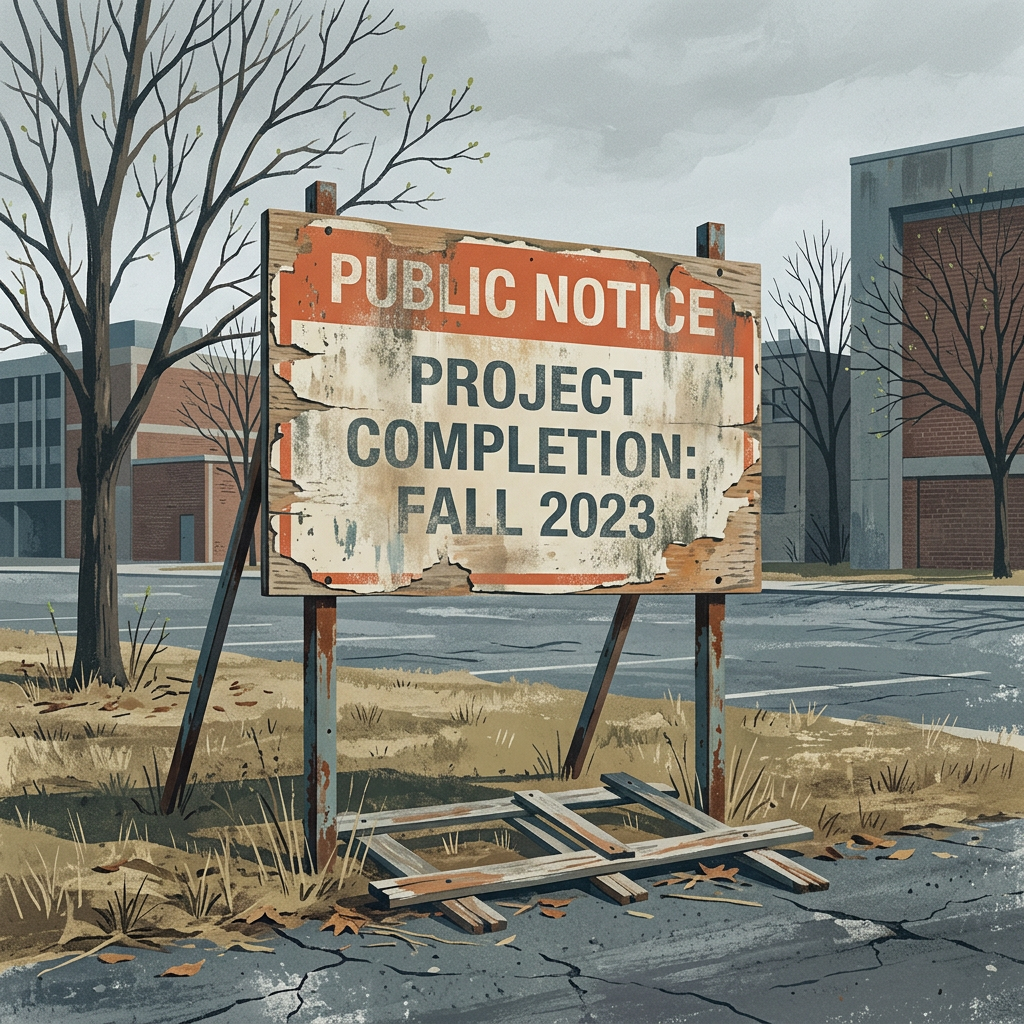
Outdated signs, wrong hours on the door, faded posters from last season, these things can seem minor. Easy to overlook. But leave them sitting there long enough and they start saying something on your behalf. They whisper that nobody is paying attention. That nobody is checking. That nobody is really tending the public-facing surface. That is how trust starts to erode before anyone has even had a real interaction with your institution.
A construction sign goes up. It gives residents a timeline. It tells people what to expect. Maybe the work will be done in the Fall. Then March arrives, and the sign is still there. Still saying Fall of the previous year. Still publicly wrong.
Once a date on a sign has passed, that sign stops functioning as information and becomes evidence. Evidence that no one updated it. Evidence that no one removed it. Evidence that no one was assigned to care for what happened after it was printed and installed.
That is not nothing.
In public work, people rarely see the internal org chart. They do not know who dropped the ball, whose project it was, or whether the delay belongs to operations, a contractor, facilities, administration, or communications. They just see the sign. They see that it is wrong. And they draw a conclusion about the institution standing behind it.
That is why old information in public matters.
An old construction sign does not just look sloppy. It makes the whole place seem like nobody is minding the store. People start to wonder: if this is wrong out here, where everyone can see it, what else is getting missed?
That is the real lesson for anyone handling communications.
Good communications is not just about making things look nice and getting them out the door. It is about tending that information from start to finish. A sign is not done when it is designed, or printed, or even hung up. It is done when someone has checked it, made sure it is still true, and decided what happens next.
That is the work. Too often, communications gets treated like a one-and-done job: make the graphic, post the message, hang the sign, walk away. But trust comes from what happens after. An old sign is not just leftover paperwork. It is a billboard for neglect.
Taking care of the details is leadership.
If you are leading communications, you need to know that anything with a date will expire. Anything people can see needs checking, not just making. Every message needs a keeper after it goes live, not just before. That is the difference between simply putting things out there and actually managing them.
People do not care about your org chart. They do not split communications and operations into separate boxes in their heads. They just see what is in front of them. If the sign is wrong, the whole city looks off. If the message is old, the people in charge look sloppy. If the timeline is long gone and nothing has changed, the whole thing starts to feel neglected.
In civic life, the little things are never just little.
People build trust by seeing the basics handled again and again. They notice if the obvious things get fixed. They notice if someone is actually paying attention. A stale sign might seem like a small thing inside the building, but out in the world, it becomes a stand-in for whether you have your act together. A sign does not just sit there. It repeats the mistake every single day.
So maybe the project is running late. Fine. Say that.
Maybe the work is done. Great. Take the sign down.
If the timeline changed, update the sign.
What you cannot do is leave old information hanging around for months, telling everyone who walks by that nobody is paying attention.
This is not just about making things or designing them. It is about running the show. Public information needs someone to own it after it goes live. Otherwise, even the best-looking sign turns into a boomerang that comes back to bite you.
If it has a date, it needs a plan for what happens next. If it is out in public, it needs someone to watch over it. Once it is no longer true, it is no longer harmless.
The fix is not complicated. Assign a staff member as the owner for each sign, message, or display. Set a reminder to review it before the date passes. Check whether it is still accurate and still useful. Then decide whether it needs to be updated, replaced, or removed. Document the review. Make sure the physical change actually happens.
Stick to that, and old information does not get the chance to haunt your hallways.
Because outdated information is never just background noise.
Once it goes stale, it starts talking for you.
