Trust Is Not a Message
Update (Spring 2026):
This piece was written as part of my Design Futures coursework at Parsons School of Design. I am currently completing the final immersive course in scenario planning, which will conclude my certification.
Trust is often treated as something that can be repaired through language.
A clearer press release.
A better statement.
A faster response.
An apology, if necessary.
In public institutions, especially, we behave as though trust lives primarily in what is said—when in reality, it lives in structure.
This question became central in my recent Design Futures coursework at The New School: What happens when we stop treating communication as messaging—and start treating it as infrastructure?
That question was not abstract for me. It emerged directly from lived experience. While serving as Communications Director for the City of Cleveland Heights, I worked inside a system where public frustration was rarely about disagreement with outcomes. Instead, it stemmed from breakdowns in continuity. Who decided this? When did it change? Why wasn’t anyone told? Which version of the information was current?
What broke down most often was not intention, but continuity itself.
My Design Futures final project explores how civic communication systems might evolve by 2035 by treating communication as infrastructure rather than performance. In this future, trust is not requested. It is built through visible process—through systems designed to survive turnover, conflict, and failure while keeping the public oriented.
One of the project’s core provocations asks us to imagine civic communication behaving less like public relations and more like a public utility. A notice does not reassure or persuade; it simply shows the loop: when a request was received, what step it is in, what changed, when it changed, and why. Updates are time-stamped and attributable. Corrections remain visible rather than quietly overwritten.
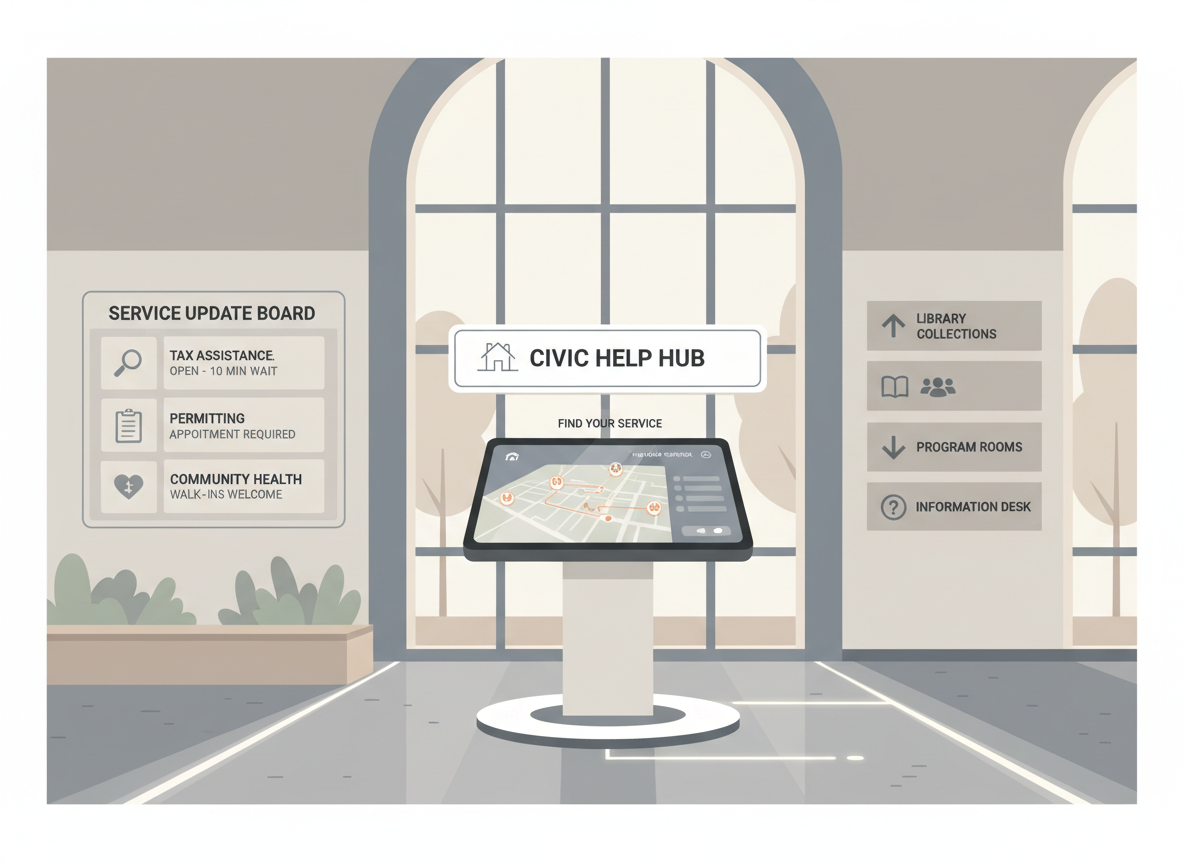
The speculative artifacts I developed for the course—transparency notices, public version records, and hybrid access boards—are intentionally modest. They are not solutions. They are prompts. Thinking tools that ask a more responsible question: What if clarity itself were treated as a public service?
The deeper insight from this work is that trust is rarely rebuilt through urgency. It is rebuilt through rhythm—through repetition, consistency, and the quiet confidence of systems that do what they say they will do, and show their work when they don’t.
At its best, design futures is not about prediction. It is about responsibility. It creates space to step back from reaction and examine what kinds of systems we are normalizing—and which ones we should no longer accept as inevitable.
You can view the full Design Futures case study, including the future framework and speculative artifacts developed for the course, here:
https://www.franceseugenia.com/design-futures-final-project
Trust, it turns out, is not a message at all.
It is a practice—one that must be designed, maintained, and made visible over time.
