

Design Futures Final Project
Course: Design Futures Certificate Program, The New School (Parsons)
Student: Frances Eugenia Collazo
Time Horizon: 2035
Project Type: Speculative futures exploration (academic)
Project Description
This project was developed as my final submission for the Design Futures Certificate Program at The New School. It explores how civic communication systems may need to evolve over the next decade in response to declining public trust, institutional turnover, and increasing complexity in information environments.
The work is informed by my professional experience in municipal communications and uses design futures methods to examine how communication functions not just as messaging, but as an underlying system that shapes public understanding over time.
-
The project focuses on U.S. municipal government contexts and asks how communication systems might function by 2035 if current challenges continue, including:
Fragmentation of information across platforms
Leadership and staff turnover
Increased public records scrutiny
Mistrust driven by opacity rather than lack of access
The project does not propose policy solutions. It is an exploratory design exercise intended to surface structural questions rather than definitive answers.
-
The project followed the core methods taught in the course:
Signal scanning to identify patterns related to civic trust, governance, and information systems
Sensemaking to understand how these signals interact and compound
Time-horizon framing to situate the work in a 2035 future context
Narrative development to articulate a plausible future scenario
These methods were used to explore implications, not to predict outcomes.
-
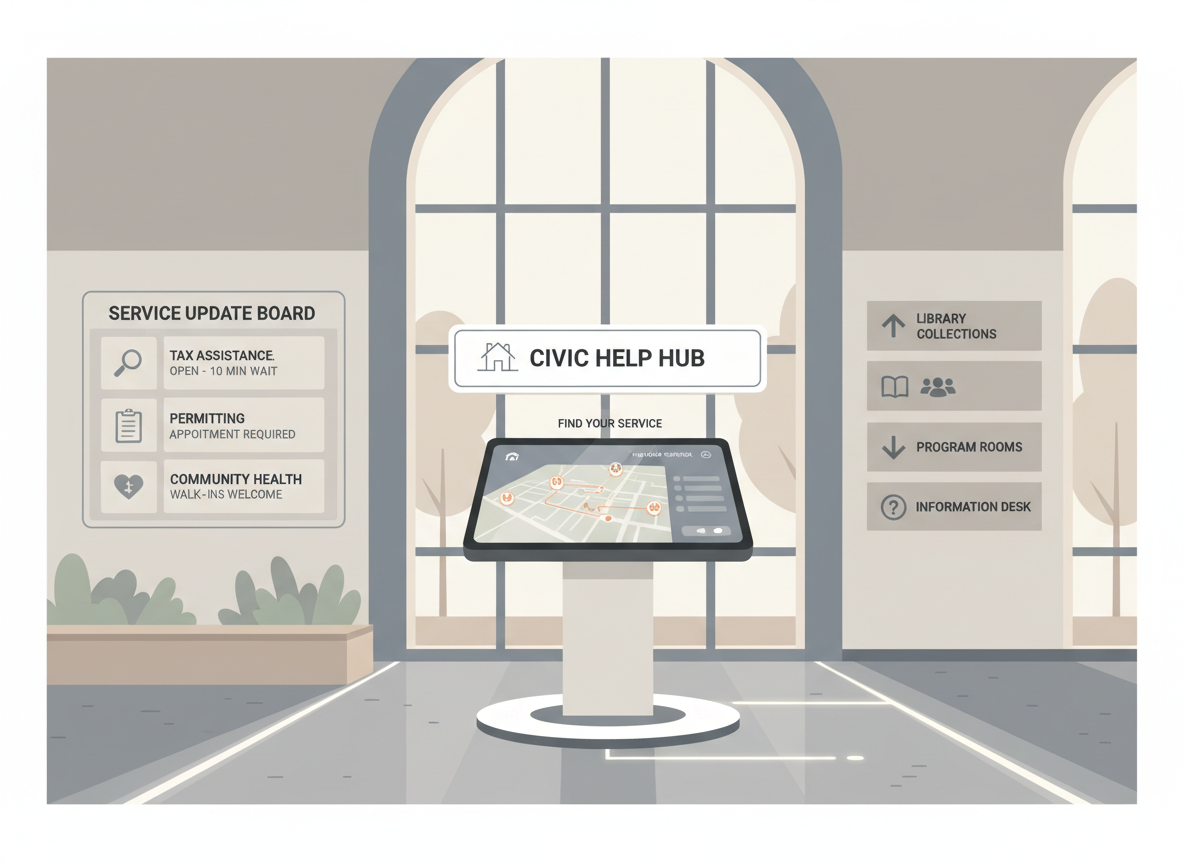
The future scenario developed for this project imagines a civic environment where trust challenges are driven less by misinformation and more by gaps in continuity—such as unclear decision histories, inconsistent records, and loss of institutional memory.
The narrative explores what it might look like if communication systems were designed to make process, change, and decision-making more visible over time, rather than relying primarily on reactive statements or individual spokespersons.
-
Rather than producing a single artifact, the project centers on systems-level thinking. The emphasis is on how residents and staff experience communication when information is structured—or unstructured—across time.
The work remains conceptual and academic in nature, consistent with the scope of the course.
-
This project reinforced a shift in my own practice from focusing on communication outputs toward examining the conditions and structures that shape how information is understood, trusted, and retained.
The design futures framework provided tools to slow down assumptions, test alternate framings, and think beyond immediate operational constraints.
-
Participating in the Design Futures program strengthened my ability to work with uncertainty, resist premature conclusions, and use speculative framing as a tool for inquiry rather than advocacy.
This project represents a learning process, not a finalized system or proposal.